


A Steward's Guide

A Steward's Guide
by Matt Johnson, High Steward for Skyrim Red Shirts
Introduction
I often say that the most difficult aspect of working in any organisation is not the sales, the grinding, meeting your KPIs, or hitting your normal targets—it is managing people correctly. People are amazing; they are just like you in many ways, yet entirely different in others. Within any group, you will see a plethora of personalities on display: some can be surly, some excitable, some lazy, and others absolute workaholics. Navigating your way through this minefield is never easy.
We are not talking about the army here. The armed forces operate within a strict hierarchical framework: you do what the sergeant says, or you’re on a charge. It’s that simple. But in places of employment, voluntary organisations, and even clubs or gaming guilds, you must understand how to get the best out of people. In many cases, these individuals do not have to be there at your beck and call. They are present voluntarily, out of a pure love for the cause—or in our case, The Elder Scrolls Online.
I put together this short guide to help Stewards (our term for officers) within Skyrim Red Shirts (SRS) understand how to bring out the best in our community. You may well ask me, “What makes you the expert?” That’s a fair point, so allow me to answer the best I can.
My experience managing people goes right back to the mid-1980s when I ran a motorcycle club, growing it to 120 members and leading trips all over the UK and Europe. Professionally, I supervised 60 people in an engineering factory from 1989 to 1994. I then moved into sales, travelling the world to deal with people across 38 different cultures and languages while peddling wares to the pharmaceutical, food, drink, and defence industries.
As a sales manager, I had to master the right questions to ask, understand what a customer truly wanted, and figure out how to satisfy that demand so my company could flourish. I learned body language techniques, how to build genuine rapport, what to say, what not to say, and the powerful realisation that sometimes saying nothing at all is the most potent move you can make. I also learned that it is entirely possible to make no mistakes and still fail. These were invaluable lessons that I carried into my own business, which I established in 2006 and still run today, twenty years later.
This knowledge became incredibly useful in 2012 when I started my first guild—a fleet in Star Trek Online. I had to learn how to attract new members, keep them motivated to play together, and design reward systems, challenges, and competitions. It worked so well that by the time I moved on from that game (entirely due to poor decisions by the game's developers), I was managing 14 fleets with over 2,000 members at our peak. Those fleets still exist today, though sadly, only a handful of those original members still play.
I have spent decades dealing with people from all walks of life: professionals, the public, government officials, the police, broadcasters (including the BBC), and thousands of guild members. Throughout most of that time, there has been very little drama. When it does bubble up, my training allows me to douse the flames with logic, compassion, and a deep understanding of both sides.
Even knowing this, I still make mistakes; this is the nature of being human; we can all mess up from time to time, but we can at least aspire to be a better version of ourselves, especially when given the role of caring for others. I hope this guide will highlight a few of the things I have learnt over the years and help you in your role as Steward, and who knows, maybe in your daily life too.

The Art of Communication
Running a large guild like SRS requires immense time, commitment, navigating occasional disappointments, and celebrating some very high highs. It demands passion and a real love for the game. Fortunately, you don’t have to be an expert to get a lot out of ESO; that is one of its greatest strengths. It appeals to a massive variety of people for equally diverse reasons. Some just want to create amazing homes, some aim to be master crafters, others want to shine in PvP, and many are eager to meet the challenge of super hard modes and trifectas.
The scale and breadth of activities perfectly match the diverse personalities attracted to the game. Operating on a European server also means navigating an international landscape where cultural frictions can happen structurally rather than maliciously:
-
The "Linguistic Filter" Exhaustion: For many members, English is a second or third language. Listening to rapid-fire slang, sarcasm, or cultural idioms requires immense mental energy, which can cause people to misinterpret jokes or stay quiet out of nervousness.
-
Differing Scales of "Directness": Different cultures have radically different standards for what is considered "polite." While UK communication relies heavily on diplomacy and softening a "No,"Central and Eastern European styles can be incredibly blunt and matter-of-fact. This bluntness is easily mistaken for aggression or rudeness if you aren't expecting it.
-
Sarcasm and Text Boundaries: Sarcasm is an incredibly localised form of humour that relies on subtle vocal inflexions. In-text chat, it can be fatal. In voice chat, it can easily sound like genuine bullying to someone from a more straightforward culture.
-
The Clique Instinct: When navigating a massive international server, people naturally gravitate toward the comfort of their native language. While private messages are perfectly fine, public guild channels and main voice rooms must remain universally accessible in English so the main hall stays open to everyone.
As a Steward, keep these dynamics in mind whenever you interact with our members, and use the following core principles to guide your communication.
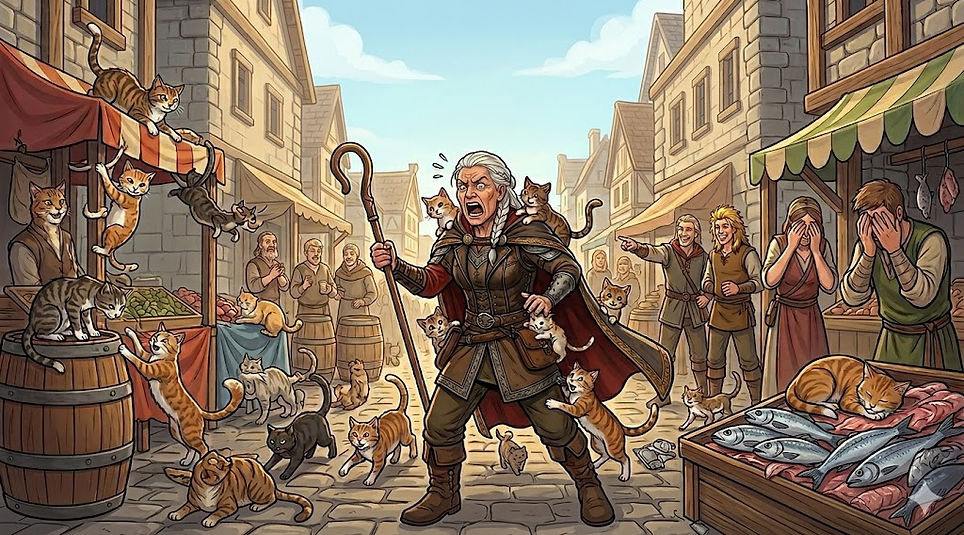
The Core Principles of Stewardship
1. Keep Language Accessible
Because English may not be a member's first language, keep your communication simple, short, and clean. Don’t use unnecessarily flowery language, and avoid idiomatic slang, localised jokes, or casual swearing when addressing a mixed international group. Give people extra time to find their words and speak.
2. Welcome the Nervous and the "Quiet Observer"
Understand that new or quiet members are often much more nervous than you are. It takes real courage to speak up in guild chat, and even more to join a voice room filled with strangers.
The Quiet Observer: These members are content to sit quietly in voice chat or listen during trials. They enjoy the company and the atmosphere but rarely speak up unless directly prompted. If a channel becomes too chaotic or aggressive, they will quietly slip away unnoticed.
Your Approach: Be polite, kind, and helpful. Introduce yourself and warmly welcome them to the channel. Ask what they prefer to be called; while they will likely choose their character or Discord name, don't assume they will. Actively create space for them by gently drawing them into the conversation by name when the airwaves are clear. Remember, while they might be highly familiar with the game itself, you know far more than they do about SRS. You do not need to be nervous when fielding questions. If you don't know an answer, simply promise to find out and get back to them—and keep that promise.
3. Act as a Resource Guide
You are there to help members navigate the complexities of a 12-year-old game featuring millions of players, thousands of quests, and an almost limitless number of build combinations. For many, those first few steps feel entirely overwhelming.
You are there to help them learn to walk so they can experience the riches the game has to offer. Guide them to resources that answer their immediate questions and set them up for the future:
-
Direct them to the SRS website for anything concerning the guild.
-
Show them how to look up item prices on TTC.
-
Introduce them to Minion and ESOUI for managing addons.
4. Handle Policy Infractions Calmly
As a Steward, you must be thoroughly familiar with the guild rules, which are rooted in basic common sense. One of the main elements to watch out for is political discussion (as sex and religion rarely come up). If someone makes a political statement, you are well within your rights to gently inform them that guild policy is not to discuss politics within our spaces.
Usually, that gentle reminder is enough to stop the conversation. If it isn't, simply change the subject and engage someone else in the chat about a game-related topic. This effectively closes the door on the antagonist, sending the message loud and clear. If they persist, move them to a separate, private channel. Explain that their current topic is not welcome or allowed. If they begin arguing about "free speech," calmly remind them that this is a private server with rules established for the good of the community, and if they choose not to follow them, they are welcome to leave.
Leave it at that, and move them back to the original channel.

5. Lead as a Mentor, Not a Boss
You are a facilitator, a mentor, a guide, and a helper—not an army sergeant. You cannot give orders outside of reminding people of the guild rules. While you hold the administrative power to remove people from the guild or voice chat, doing so should be handled through a formal Steward's Inquiry (detailed at the bottom of this guide), where the entire Steward team collaboratively decides how to address deliberate troublemakers.
You cannot say to people, "I am the Steward, and you do what I say." That is not your role. I am the High Steward and the owner of the guild, and even I would never dream of saying that to anyone.
Tactfulness is a skill you must master. Count to ten before reacting to friction. We are all human, and our emotions can get the better of us. You might be dealing with heavy real-life problems, and the person you are interacting with may be dealing with even more severe real-life dramas—stress, anxiety, depression, or physiological conditions you know nothing about, but which perfectly explain their behaviour.
It is often said that to truly know someone, you need to walk a mile in their shoes. Since you cannot do that, adopt the approach of assuming there is always something more going on beneath the surface. They may be facing something devastating that they would never share with the group, and that bottled-up stress colours their judgment.
The Guarded Traditionalist: These members can be stubborn, direct, and set in their ways. They might use self-deprecation as a shield when challenged (e.g., "I guess I'm just the fool"). They can react defensively to changes, interpreting a shift in guild style as a personal attack.
Your Approach: Never assume malice where there might simply be desperation or frustration, and never bite defensive bait. Avoid assuming the worst. Count to ten, change the subject, or invite them to a quiet, private chat. Always pivot the conversation away from personality clashes and back to the core philosophy of looking after the wider community. Your goal is always to defuse the situation, not cause it to blow up in your face.
6. Avoid Overexplaining (The Driving Instructor Analogy)
When helping members, avoid overloading them with data. Game builds are complex, and it is easy to accidentally overwhelm people.
The Perfectionist / Min-Maxer: These players are driven by optimal performance, hard modes, and raw numbers. They know game data inside and out. However, they can easily fall into the trap of "showing off" their knowledge, throwing advanced, multi-layered strategies at a beginner, and creating a cold, exclusionary atmosphere.
Your Approach: If someone asks how to make a heavy attack sorcerer, point them to the website for a solid setup, explain which dungeon drops the necessary set, and offer to run that dungeon with them.
Do not throw 15 different optimisation variants into a single, short conversation.
Imagine you are teaching a student how to drive a car: you explain how to start the engine, use the clutch, steer, and brake before letting them try. You don't immediately lecture them on fuel injectors, DPF filters, and sport mode with launch control.
People are not computers; it takes time for the human brain to rewire itself, absorb new terminology, and successfully put it into practice. Keep explanations focused on the basic mechanics first.
7. Look Out for Your Guildmates and Protect the "Steady In-Betweener"
Our guild relies heavily on different types of social players, and we must protect them all.
The Steady In-Betweener: These members are the absolute bedrock of SRS. They hit solid, mid-tier numbers (like a reliable 35K DPS), try their absolute best, and love the social connection. However, they can easily get confused or forget a mechanic under pressure, making them highly susceptible to feeling like a "burden" if someone makes a careless comment.
Your Approach: Protect them fiercely. Validate their presence, remind them that the atmosphere is brighter when they are around, and use data-based reassurance to prove they are doing great.
Active Outreach: If you notice a regular player has been missing for a few days, reach out via private message on Discord. If they are still playing the game but avoiding social spaces (which you can check via their last-online status on the guild roster), send them an in-game mail. Note: Because sent in-game mails are not currently saved in the history, I highly advise copying and pasting your sent messages into a notepad for your own future reference.
Simply ask if they are okay and let them know they haven't been seen in chat for a while. Show them that you genuinely care. When people receive a message like that, it proves they are valued and missed.
It is incredibly important to most people to know that others care about their welfare. Usually, the answer is simple: they are feeling burned out, taking a break, or playing a newly released triple-A game. But if they respond and reveal they were bullied or made to feel bad in chat, that is the exact moment to escalate the matter to a Stewards Inquiry by notifying other Stewards or me immediately.
8. Speak of Others Constructively
Avoid talking about guild members in a derogatory way to others. It is hurtful, achieves nothing, and will eventually catch up to you. If you hear other members speaking badly about someone, ask them to speak with you in private so you can assess if a real problem is brewing. If you are unsure how to handle what they tell you, contact other Stewards or me for advice.
While it's true that leaders rarely hear the good things said about them, we should always strive to speak well of our members (e.g., "Take so-and-so with you, they are a fantastic tank and will really help your dungeon run"). We do not want to hear the opposite (e.g., "Don’t take them, they suck and will die in seconds").
If someone asks to bring a player who you know isn't quite ready for a specific piece of veteran content, phrase your advice constructively: "I think that particular content might be quite a big jump for them right now; ensure they are fully aware of the mechanics and what you are planning before inviting them along."

9. Manage "The Whirlwind" (Those Who Love the Sound of Their Own Voice)
In any community, you will inevitably encounter individuals who truly love the airwaves—whether out of boundless enthusiasm, a subconscious desire for the spotlight, or simply because they haven't learned where their internal "volume knob" is located.
The Whirlwind: These members burst with intense love for the game, talk fast, and want to help everyone all at once. Because they lack a filter, they can unintentionally hijack a voice room, flooding the channel and drowning out our quieter members.
While our principle of empathy means you can't just tell them to shut up, you also cannot allow them to dominate the space. You can break a runaway monologue using a few different tactical methods:
The Pass-and-Catch: "Hey Bob, that’s really interesting. I think Steve has been working on something similar. What do you think, Steve?" If Bob tries to interrupt Steve's answer, firmly but politely catch it: "Hold on a second, Bob, let's listen to what Steve has to say here."
The "OMG Game Crash" Tactic: Cleanly interrupt the monologue with an external distraction: "OMG, not again! My game just crashed right to the desktop! Is anyone else getting this issue tonight?"
This naturally resets the room's focus and opens the floor to others.
The Content Pivot: If it happens mid-raid or mid-dungeon, anchor the room back to the task at hand: "Hey Bob, that’s an interesting topic, but right now we need to focus up and prepare for this boss. Everyone, make sure your gear is repaired, your food buff is active, and your potions are ready. Let's go."
The Private Intervention: If a situation is moving so fast that you cannot get a word in edgewise, use an interventionist approach: "Hey Bob, sorry to interrupt you, mate, could I grab you for a quick private word? I'm just going to move us down to the instruction channel for a minute."
When you hold a private chat like this, always differentiate between their intent and their impact. Most people mean well, so validate their enthusiasm while being perfectly candid about how it affects the room: "I honestly love the passion and energy you bring to our voice chat; that kind of enthusiasm is exactly what makes SRS great. However, sometimes that energy can inadvertently dominate the channel, leaving very little room for our quieter members to find their voice. I really want our guild to be a sanctuary where everyone feels comfortable taking a turn on the mic. Could you help me out by keeping an eye on that and helping to create space for others to speak during our events actively?"
This approach is incredibly powerful because it completely reframes the issue. Instead of making them feel like they are 'on a charge,' it appeals to their better nature by inviting them to be your accomplice in mentoring the quieter members of the community.
10. Avoid Saying "No" Without the "Why": If a member suggests a specific strategy or route during an event, never shut them down with a flat, unexplained "No." This helps no one and deeply irritates the speaker. Instead, always qualify your refusal with a diplomatic explanation: "We actually tried that approach before, and it wasn’t very successful because..." or "We can't quite do it that way because this specific boss mechanic will wipe us if we do..." or "That is a really interesting idea, but I’d like to try this strategy first. If it fails, we’ll look at your idea in more detail."
When you provide the "why" behind a rejection, you maintain your authority through mutual respect rather than raw rank. It shows you value their input even when you can't use it.

11. Be Ready to Repeat Yourself (For Years)
In MMOs and voluntary organisations, member turnover is naturally rapid. While we have a brilliant, dedicated core membership who stay and play for years, there will always be a much larger contingent of new members who are just finding their feet.
Because of this, you will have to play through the same conversations again and again over the years. It is simply the nature of the beast. You might personally feel bored or frustrated that you are explaining where to find the event calendar, what time a trial starts, or why we don't discuss politics for the hundredth time—but remember: for that new member, it is the very first time they have ever heard it. Keep your delivery as fresh, patient, and welcoming for the newest recruit as it was for the very first.
12. "Enough is Enough" (Look After Yourself)
We have spent a lot of time discussing how to be diplomatic, caring, patient, and understanding with our members. But there is one specific guild member who requires your absolute highest level of care: you.
There may come a time when you feel drained, stressed, or simply do not want to handle Steward responsibilities for a while. That is completely normal, understandable, and okay. You can step down from the Steward rank whenever you need to. If you wish to step away to focus on yourself and return to the role six months or a year down the line, simply ask, and you will be welcomed back with open arms.
Your mental health and real-life balance are just as important as anyone else's. In SRS, we deeply value the extra contributions you make, which is why you must always feel empowered to take a break whenever you need one.

The Stewards Inquiry
When serious behavioural issues arise—such as bullying, harassment, or deliberate disruption—the situation must be escalated to a formal Stewards Inquiry.
This process removes individual bias and ensures we act as a cohesive leadership team. A Stewards Inquiry involves the entire Steward team reviewing the situation together against our community guidelines to determine the appropriate response. If a member's behaviour is severely impacting the safety or harmony of the guild, document the incidents, notify me (the High Steward), and we will convene the inquiry to handle the matter cleanly, fairly, and decisively.
In Conclusion
These guidelines are built upon decades of experience managing people across all kinds of real-world and virtual organisations. Please do not view this handbook as a rigid set of clinical instructions, but rather as my way of equipping you and thanking you for the incredible job you do for our community.
Dealing with people is not always easy, but it can be profoundly rewarding.
People are what make MMOs truly interesting; the game itself is merely the backdrop, but the real story is you, your execution, and your guildmates.
Have fun out there
